It's what they are meant to do
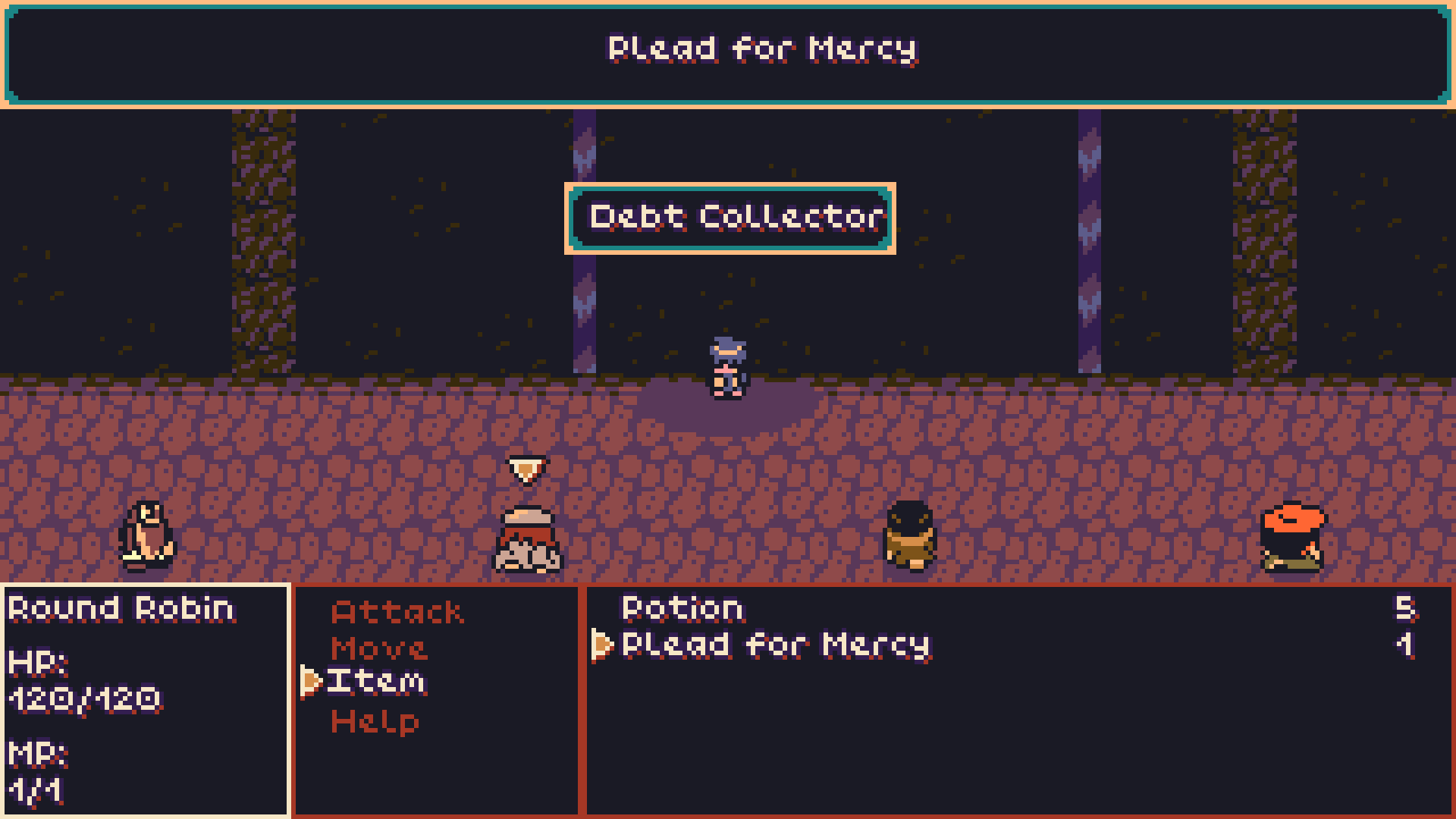
When I go outside, I tend to be very single minded about what I want to do. I want to go to the store. I want to take a walk. I have to go to the laundromat. Unfortunately I live right in the middle of town, so there's a lot of people outside all the time and some of those people are employed to stop people who walk past them.
It's a nuisance. There are places I have to be and things I need to do and here's some underpaid university student trying to convince to me sign up for some newsletter or whatever.
JRPGs with random encounters are similar. There are places you need to be (the Castle up in the North), and things you need to do (murder the King inside), and every 30-100 steps you get interrupted by a loud noise and then you have to deal with three bears who really would like to eat you.
I think the most common motion I do when I play a JRPG with random encounters is roll my eyes. Oh, here we go again with the interruption. So annoying.
The random encounter forces you to stop thinking about the distant goal that is in your mind and the anticipation of all the potential rewards that might come from getting there, and puts an immediate problem right in front of you, that usually gives you nothing tangible in return. Quite the opposite actually, because most of the time it will drain your resources, and if things go really sideways, it will eat your progress. Sure, you will probably get some "XP" and some "Gold" and maybe you'll even get a potion drop as a reward for your efforts, but that doesn't alleviate the frustration one feels when your nice wander through a forest gets interrupted by a Voracious Hole.
The interruption is the point. The frustration is the purpose. Encounters obviously are meant to drain resources and push characters along whatever progression curve the designer set up, but ultimately what they also do is make you wary of stepping outside. You're constantly asking yourself "do I really need to go down this specific corridor?". Sooner or later you get a feel for the frequency in which a game triggers random encounters, so you can gauge how often you'll be interrupted as a consequence for your decision.
Over the years I've learned of paths that take me to most of my destinations without many random encounters. Some take longer, and occasionally I have to navigate something very annoying, like a delivery truck that's blocking a very narrow street. But I take the rare very annoying random encounter, and the longer path, over being interrupted every ten steps by a minor nuisance.
The space you exist in pushes you into specific behavioural patterns and as an actor inside of it, it is up to you how much you decide to push back.
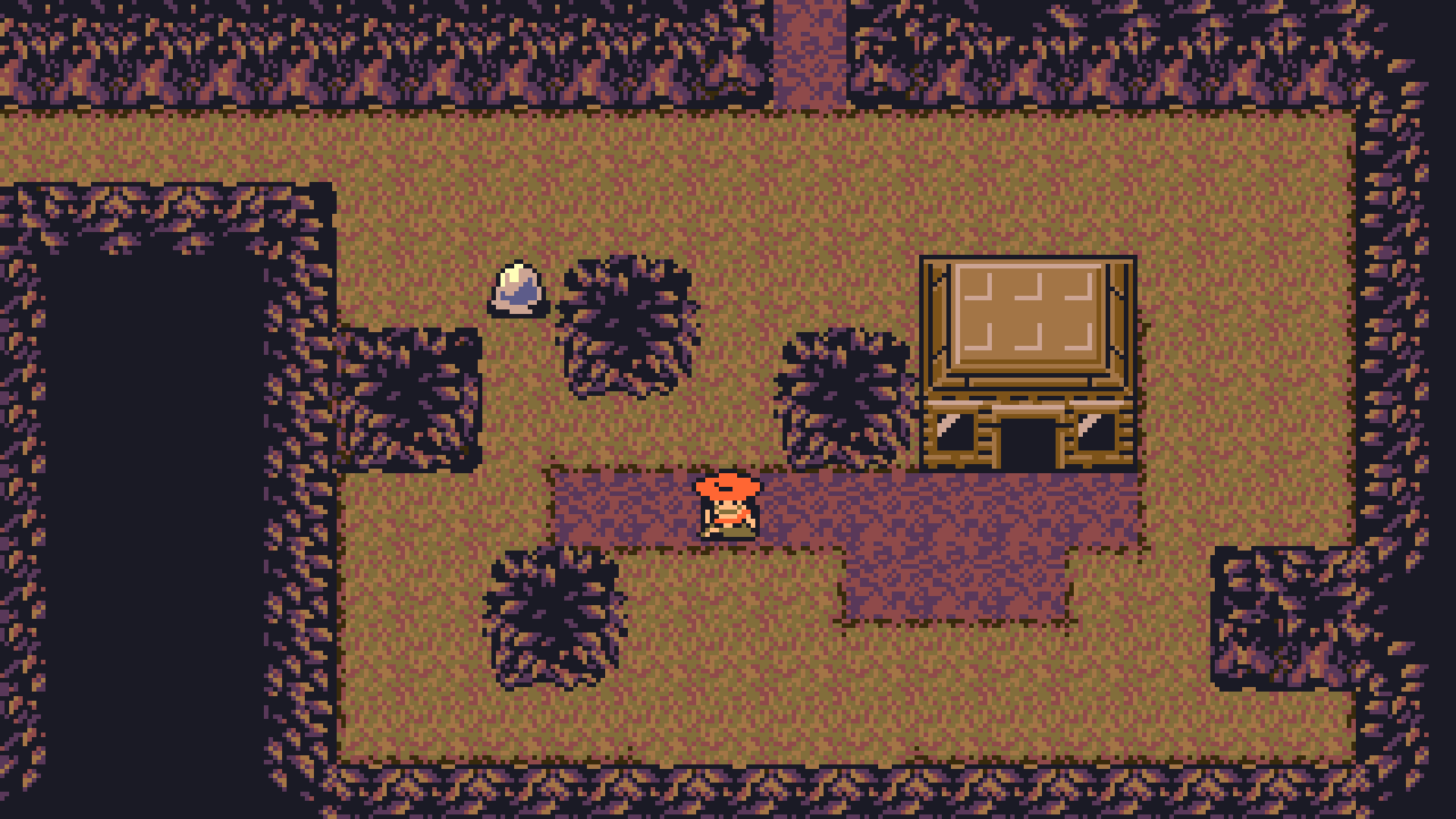
I do not like random encounters in JRPGs, and I think this is why I chose against them in Leid vom Meeresfall. I also thought and still think, that visible field encounters create a different, interesting decision making process. After all, you can now see exactly how many fights you will have to endure to see what's at the end of a specific path you want to explore.
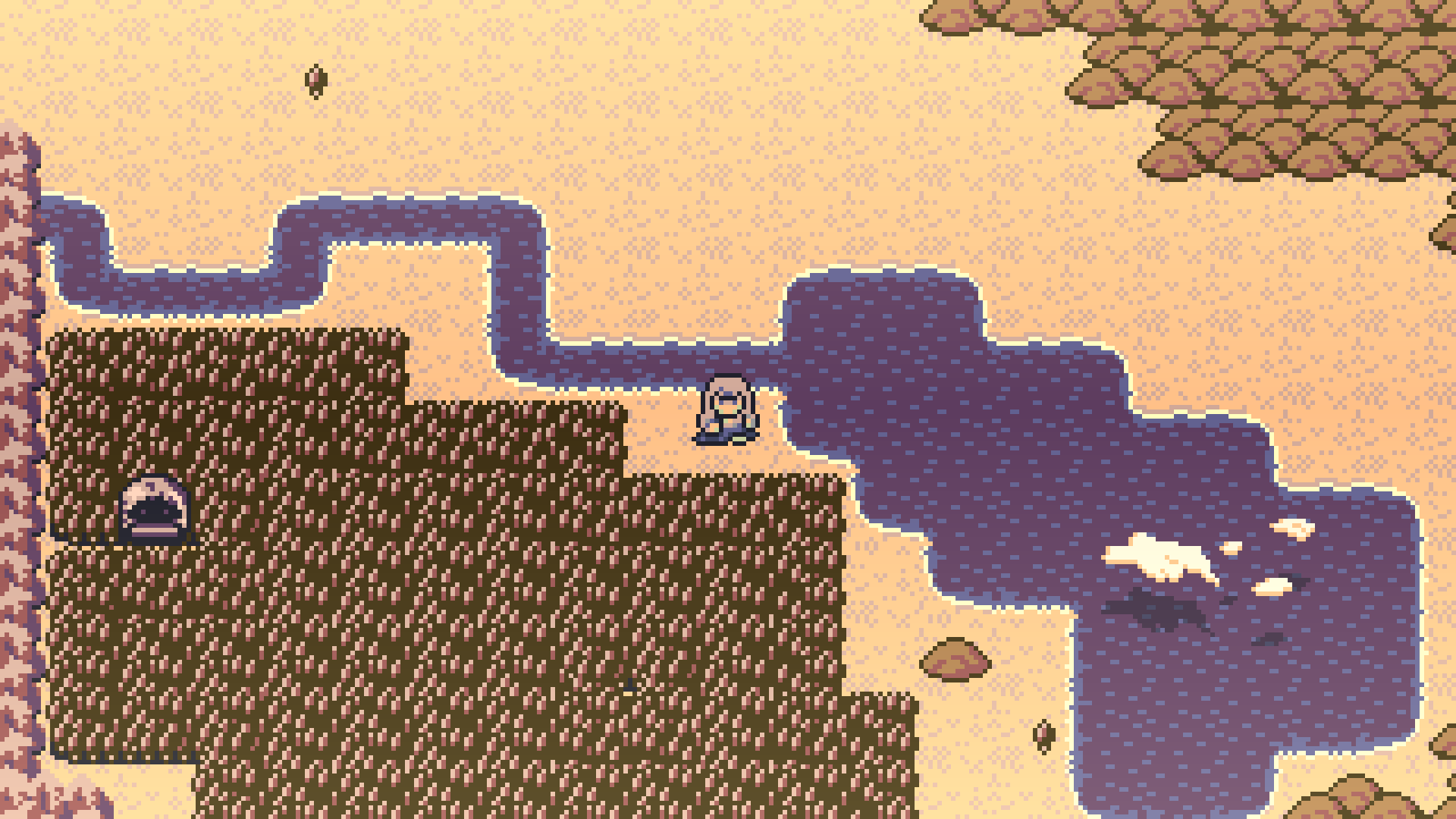
Eswahr Eternal however has random encounters. One thing that is very important for me with that game, is that I want players to really feel the distance they are traveling and learn the spaces they exist in. So you need to walk everywhere and while they might decrease in frequency, random encounters will never truly go away. Entering a cave, or exploring a specific corner of the map means you need to go there and back and you need to gauge if doing so is worth the effort.
Again, you can do that to a degree with field encounters, but usually those vanish after you're done with them, so you only have that decision making process for about half the distance. The way back is just empty walking.
I'm not very much into mountain climbing, but what does fascinate me about it, isn't really the part where you climb up the mountain, but the part where you go back down. Technically you've done the big thing you went out to do, but you kind of have to do it again for it to actually mean anything, but nobody really talks about that second half of the process.
So of course you need to walk out of the dungeon, and of course you need to still fight encounters on the way out. The place doesn't really change, just because you killed the thing at its heart, why should it?
The other part that random encounters do is that you can play around with frequency and encounter groups. You can create maps where it's possible to take shorter paths, but those might have a higher density of encounters. Or a lower density, but the encounters are more difficult and the chance for surprise attacks* are higher.
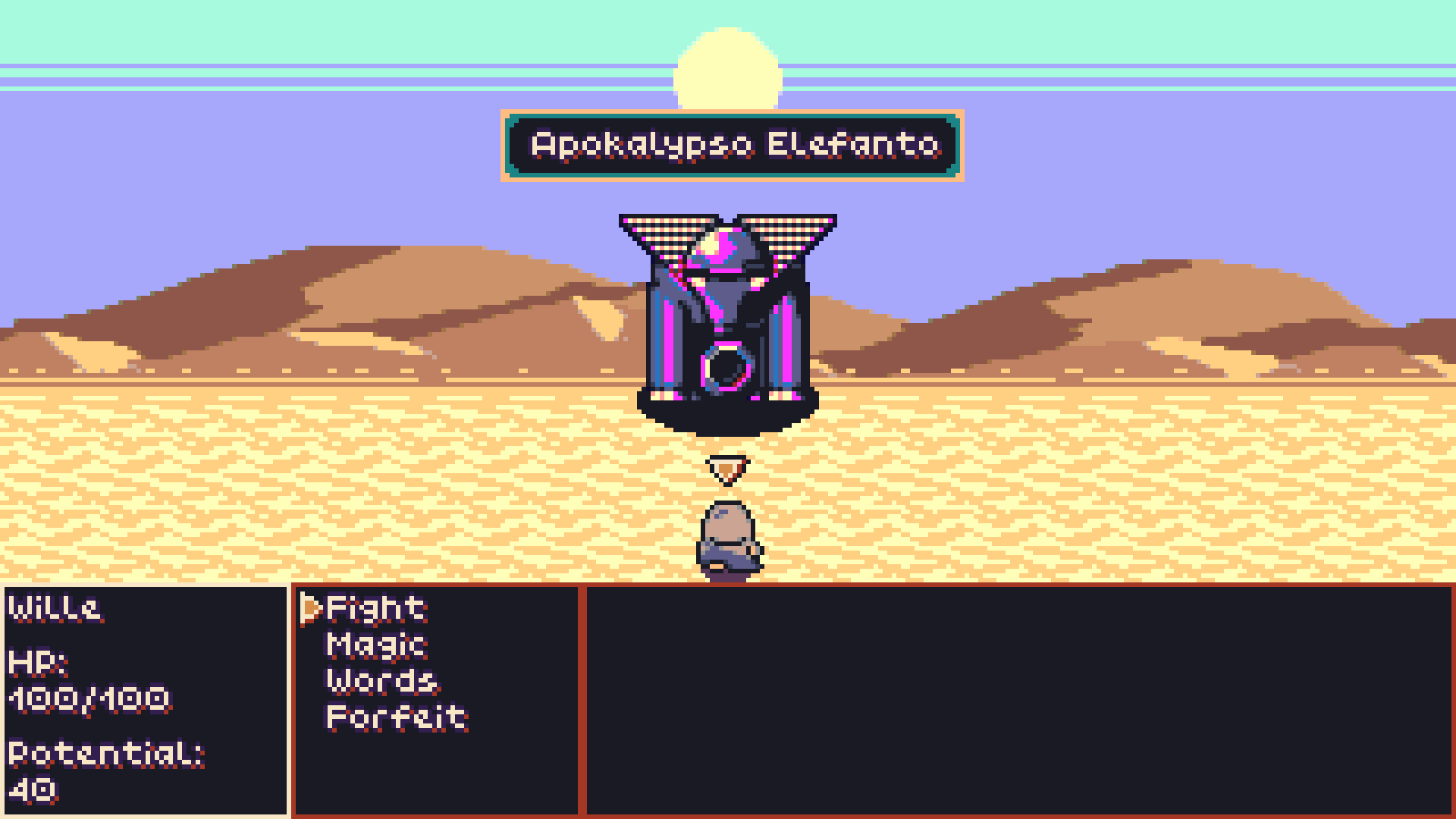
By not having this information out in the open, you create superstition. People might pick up on the broad tendencies of your systems, but they can't ever fully grasp them. So at some point players will take specific paths on the overworld map, because they somehow learned that those are the least annoying to take. The shape of these paths will be different, depending on each players frustration tolerance. Whatever the case, they have found a way to exist and travel in the world they inhabit that best suits their interests and needs.
The curse of good game design caused us all to give too much importance to the points that lie at the beginning and the end of a space, at the cost of everything that lies in-between. But it's there where we spend most of our time. It is there where the player's virtual representation exists.
I hate random encounters, because they force me to exist in that barely-defined in-between space. They are annoying to deal with. They waste my time.
But it's because of this, that I firmly believe that they have a place and a purpose. They rip me out of that single-minded pursuit of my next objective and confront me with a problem I have to deal with right here and right now. They make the murky in-between spaces real, tangible and threatening.
So if you play a game with random encounters, and you feel annoyed by their existence, ask yourself this:
What if this is okay?
And see where that takes you.
*Surprise attacks are important. Why should it always be the player who is allowed to go first in a battle? You think a Swan out in the wild will wait for you to make your first move before it breaks your arm?
Related Posts:
Notes about Evil Game Design
https://mokkograd.net/posts/2025-11-25-Notes-about-Evil-Game-Design
Anything can be a battle
https://mokkograd.net/posts/2025-10-07-Anything-Can-Be-A-Battle
Games as a Restaurant
https://mokkograd.net/posts/2026-04-14-Games-as-a-Restaurant